

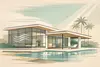
Luxury is easy to spot. Wellness is harder to fake.
In Naples and across Southwest Florida, it’s common to walk into a brand-new custom home that photographs beautifully—then notice it immediately: the air feels heavy, the light glares, the rooms echo, the “great room” doesn’t actually feel great. The finishes are high-end. The experience is not.
Wellness-driven design isn’t a checklist of spa moments.
It’s architecture that quietly supports your body and your routines—better sleep, steadier energy, calmer acoustics, easier indoor–outdoor living. For a high-authority reference point, see the International WELL Building Institute (IWBI) and the WELL Building Standard.
In SWFL, where sun, humidity, and water define daily life, you either design for those forces—or you spend years fighting them.
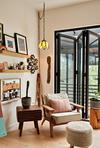
Start with what you can’t see.
In this climate, comfort is inseparable from moisture control. If the house is cold but clammy, the system is wrong, the detailing is wrong, or both. A wellness-focused home is built around right-sized mechanicals, whole-home dehumidification, fresh-air exchange, and filtration—then backed up by assemblies and details that don’t invite condensation where it doesn’t belong. You should feel the difference the moment you step inside: dry, clean, effortless.
Next is light.
Southwest Florida gives you abundance, but it’s not gentle. The goal isn’t bigger windows—it’s better daylighting.
High-performance low-E glazing, disciplined shading, and thoughtful openings bring in brightness without turning interiors into a glare box.
When light is controlled, rooms feel quieter. More composed. More livable—especially in the afternoon when the sun is at its least forgiving. Then there’s the part Naples does better than almost anywhere: the threshold between inside and out. The best homes here don’t “have” a lanai as an accessory.
They’re planned as a single, continuous environment—living spaces that open cleanly, outdoor rooms that function like interiors, transitions that feel intentional rather than tacked on. When that connection is right, wellness becomes automatic: more air movement, more daylight, more time outside, less friction in the day.
Wellness also shows up in plan, not square footage.
A flexible room that can handle movement, guests, and work without visual chaos. A pocket of quiet in the primary suite with controlled light and real acoustic separation. A sheltered outdoor niche that feels private even in a social house.
These aren’t “features.” They’re moments of relief, designed into the rhythm of the home.
Materials and systems are where it all compounds.
Low/zero-VOC specifications matter. So does choosing finishes that behave in salt air—stone, ceramic, treated woods, corrosion-resistant metals—and avoiding anything that will look tired the moment the climate has its say. Smart home tech only helps when it reduces decisions: stable humidity setpoints, lighting scenes, and shading that responds without being fussy.
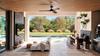
And Naples, even within SWFL, raises the bar. Clients here are design-literate. The expectation is restraint, proportion, and detailing—wellness that reads as architectural rather than trendy.
Add coastal realities - wind-driven rain, sun load, salt exposure, flood considerations—and “feels good” becomes inseparable from “built right.”
Wellness can’t be installed at the end.
It’s set early: site placement, solar orientation, envelope strategy, glazing, mechanical approach, circulation, and thresholds.
Hlevel Architecture designs custom homes in Naples and Southwest Florida as complete environments—refined, resilient, and quietly supportive.
Wellness meets design. Not as a feature list, but a standard.
f you have any questions or comments, we would love to hear from you.Contact us HERE