
At Hlevel Architecture, our work in Naples and Southwest Florida is rooted in a simple conviction: great design is an active participant in human well-being, not just an aesthetic exercise.
We've long believed that understanding how people across the globe live, thrive, and find longevity allows us to craft homes that truly perform. Having traveled to places like Sardegna, the Italian Alps, and the Veneto coast many times, we now look at how we design with a new lens — one focused on health, intentionality, and what these ancient environments can teach us about modern living.
When translated through the architect's eye, these global insights form the foundation for our work in Naples: where subtropical climate, brilliant light, and coastal living demand a high-performance approach to residential architecture.
In the Blue Zones — those rare pockets where people routinely live vibrant lives past one hundred — longevity isn't achieved at the gym. It's built into daily existence: walkable streets, healthy diet, deep family and community connections. Recent urban studies show that thoughtfully scaled environments naturally increase daily physical activity by over a thousand steps without residents ever thinking about it.
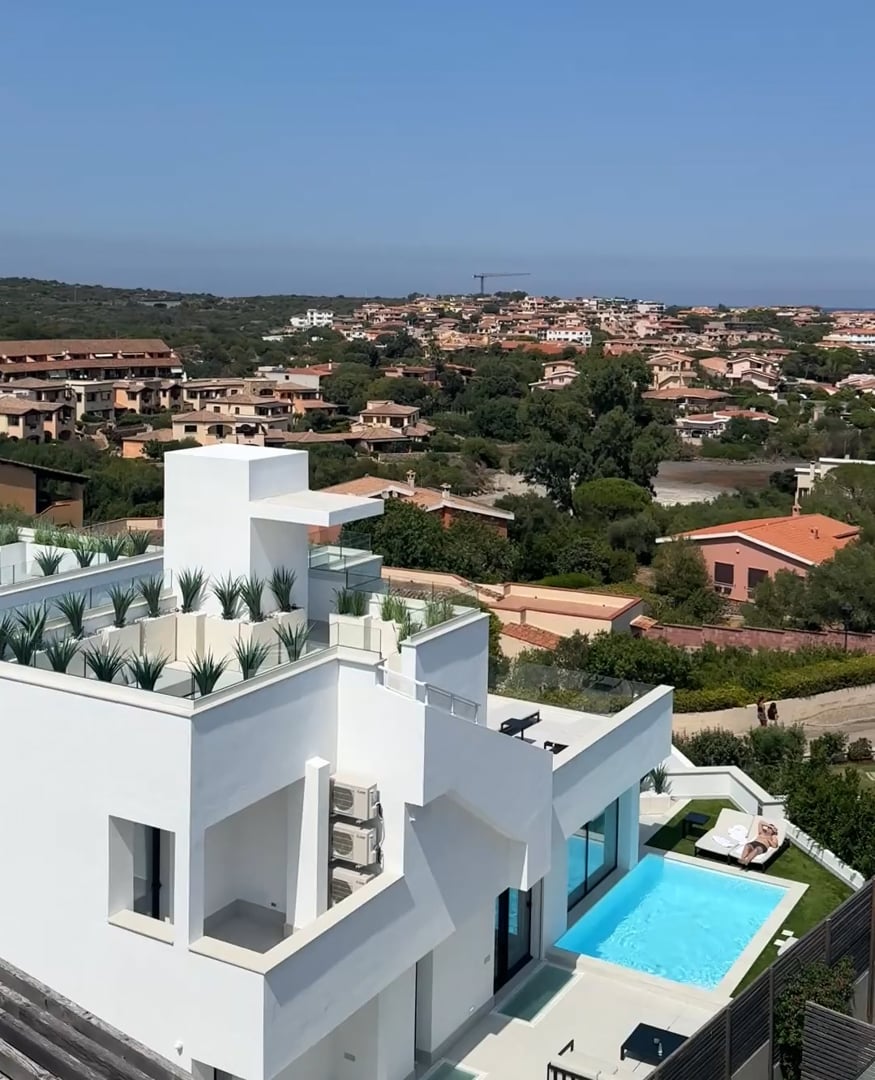
In Sardegna, historic villages are structured around narrow stone streets, staircases carved into limestone, and multi-level living that requires physical engagement with the landscape. You move to fetch water, to visit neighbors, to navigate your home.
We translate this into our Naples homes through wellness design architecture. Rather than sprawling, single-level layouts that encourage a sedentary lifestyle, we craft multi-tier spatial experiences — circulation paths that weave through the home, staircases as sculptural centerpieces bathed in natural light, and seamless indoor-outdoor connections that nudge the body into effortless movement throughout the day.
(Video of coastal Sardinian village)
Walk through an ancestral alpine home or a coastal Italian villa, and you notice a visceral honesty: raw local stone, open-grain timber, breathable lime plasters. These materials don't pretend to be anything other than what they are. Over time, they patina gracefully, absorbing the stories of the people who inhabit them.
In Florida's humid, subtropical climate, material selection requires a balance of poetry and resilience. We favor a timeless, tactile palette — high-performance stone, engineered timber that honors natural warmth, and fiber-cement systems that stand resilient against coastal storms while maintaining refined elegance. When you run your hand along a wall in one of our homes, you feel a grounding connection that synthetic materials simply cannot replicate.

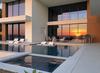
Abundant sunshine is one of Southwest Florida's greatest gifts, yet it presents a paradox. Uncontrolled, blistering sunlight can force homeowners to retreat behind motorized shades, severing their connection to the natural day-night cycle.
Our travel insights, alongside research from our own panel on Lighting or Living Well explores how spatial configurations and lighting strategies actively regulate human biology.
True circadian lighting design isn't about flooding a room with white light; it's about choreography. We design light wells, deep overhangs, and clerestory windows that filter intense Florida sun into soft. The result: homes that support restorative sleep, sustained focus, and genuine calm.
Every building site has an autobiography written long before humans arrived. High in the Alps, ancient Permian fossils emerge from stone strata, revealing the slow geological forces that shaped the peaks. In Florida, the landscape tells a different story: ancient coral ridges, dense pine flatwoods, mangrove fringes, and a delicate subtropical canopy.
Our design process begins long before the first line is drawn. We read the atmospheric and geological narrative of the land — sun angles, prevailing breezes, water tables, native flora. In projects like our Coconut Grove residence, the site's ecology dictates the building's orientation, roof pitches, and fenestration. The home becomes a living instrument that breathes with its surroundings.
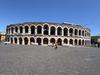
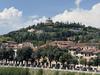
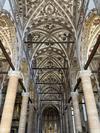
Verona is often called the city of love, but what strikes us most is its visible layers of time. A Roman arena stands steps from a medieval piazza, which gives way to Renaissance palazzos and modern cafés. The city doesn't erase its past — it builds upon it, letting each era speak while creating something cohesive for the present.
This idea translates directly to how we approach design in Florida. In renovations, we honor the bones of a structure while introducing new life. In new construction, we design for adaptability — spaces that can evolve as families grow, as needs shift, as decades pass. A home should not be frozen in the year it was built; it should be able to carry the stories of generations to come.
6. The Architect's Synthesis: From Global Observation to Built Reality
There is a difference between seeing a place and understanding why it works. Anyone can photograph a Mediterranean village or admire an alpine farmhouse. But translating those observations into a home that performs in Southwest Florida's specific climate, light, and ecology requires something deeper — a process of synthesis.
This is what we do. We observe how the world's most enduring communities are shaped by their environments, and we ask: What principles can travel? Which ones are universal? And how do we adapt them to the subtropics, the salt air, the afternoon storms, and the particular way light falls over Naples?
The answer is never a copy-paste. It's a transformation — one that requires technical rigor, deep site knowledge, and a genuine curiosity about how people live well. That's what guides our studio, and it's what makes every project we take on a true original.
Great architecture doesn't start with a floor plan. It starts with curiosity — with observing how the world lives, and asking what we can learn from it. The lessons we gathered this summer are ones we've been applying for years, but seeing them in their original context reaffirms something we've always believed: the best homes are not designed in isolation. They are shaped by place, by light, by material, and by a deep understanding of how people actually want to live.
If you would like to learn more, feel feel to contact us, we would love to hear from you.